Our Company Blog

Extend the Life of Your Chimney

Chimney systems are comprised of many parts that rely upon one another to operate at peak efficiency.  A problem with one part of the system can cause another part of the system to have to work harder to pick up the slack, thereby causing that overworked component to wear out at a much quicker rate.  This can quickly become a vicious cycle if the initial problem isn’t addressed in a timely manner.  The moral of the story here is quite simple: repair minor problems early on to prevent them from becoming major problems down the road.  Keep reading to get a better understanding of ways you can help to extend the life of your chimney.

Put a Cap on your Chimney

Installing a properly-sized chimney cap is one way to be proactive in protecting your chimney.

Installing a properly-sized chimney cap is one way to be proactive in protecting your chimney.

A chimney cap is designed to cover your chimney’s opening in order to keep water, birds and other wildlife, leaves, twigs and other debris from getting into your chimney.  Water is diverted away from the center and off the sides of your chimney.  Mesh screening on the side blocks birds, other wildlife, leaves, twigs and other debris from getting in.  Purchasing a chimney cap and having it installed by a certified chimney professional is a choice you won’t regret!

New Chimney Flashing will help Prevent Leaks

Chimneys are notorious for leaking; the source of these leaks is almost always the flashing.  It keeps water out of the chimney and protects your flue and roof.  Flashings are made from a variety of materials (e.g., aluminum, copper, galvanized steel, and/or tin).  You should have new chimney flashing installed if any of the following issues exist:

  • Your flashing is missing.
  • Your flashing is rusted through.
  • Your flashing is falling off.
  • Your flashing is completely covered with roofing tar (this is a common short-term fix that’s sure to be hiding bigger problems).

Many homeowners also opt to have new flashing installed when having a new shingle-roof installed.

Crumbling Mortar is a Definite Warning Sign

The mortar used in your chimney’s construction is exposed to various elements on the outside and heat and chemical compounds from your firebox on the inside; all of these things speed up the weathering process.  Because of this, it’s common for mortar to crumble and fall away sooner or later, which leaves open areas between the bricks.  This only makes a bad problem worse, giving rise to more issues.  During chimney repointing, the process for repairing your damaged mortar, a chimney professional will remove the damaged, old and loose mortar from the joints between the bricks and replaces it with new mortar.  It can’t be stressed enough that only a skilled professional should perform this work, as it requires an experienced hand.

Flue Liners

Problems in your chimney’s flue can present serious risks to your home and family, because it’s no longer able to perform its primary function: safely containing and venting the products of combustion to the outside of your home.  If your current liner has deteriorated, it’s recommended that you either have a new one installed or have your current liner repaired.  There are several different relining options available to you, depending on both the type of flue liner you currently have and the overall condition of your flue.  Because of the nature of the job completed by your chimney’s liner, it’s a critical part.  Every chimney must have a working liner!

Your chimney system is comprised of numerous parts, all of which are inspected by a chimney professional during your yearly chimney inspection and sweeping.  To prevent major chimney system repairs, it is of paramount importance to make minor repairs as soon as problems arise.  Some parts are in the line of fire more than others and are adversely affected by the heat, while other parts are exposed to the elements, thereby causing them to wear out faster.  Contact the team at Weststar Chimney Sweeps with any and all of your chimney service related questions.  We want you to have all of the information you need!
Chimney Checklist for Spring

Spring: A Fresh Start for Your Chimney

You’ve done an excellent job in taking good care of your chimney during winter, but no matter how cautious you’ve been, there might still be things that happen inside the chimney that are just beyond your control. Winter might have left some damages behind that need to be inspected and fixed and have to be attended to right away. Our Chimney Safety Institute of America (CSIA) certified chimney sweeps from Weststar Chimney Sweeps would like to put your mind at ease.

Chimney cleanings and inspections are not DIY projects. Let the certified professionals put your fears to rest.

Chimney cleanings and inspections are not DIY projects. Let the certified professionals put your fears to rest.

Parts & Systems

There are certain parts of the chimney which are vital in directing the smoke out the right way; parts like the:

  • Flue
  • Flue liner
  • Damper
  • Smoke Chamber

These parts help create draft inside the chimney. However, these are also the parts that are most prone to creosote buildup or other obstructions making it harder for smoke to go out. This opens doors to a lot of problems that will not only cost thousands in repairs, but may even cost you something more valuable—your health or even your life.

What to do

To prevent objects from entering the chimney, it’s best to have a chimney cap installed so that the inside of your chimney is protected from all the dangers that the outside world can bring. Some examples are animals, debris, spider webs and leaves.

Then there is water. This is one of the things chimneys hate the most because it destroys it—the performance and the structure. It can cause the brick walls to deteriorate. This problem can be prevented by waterproofing the chimney and repairing the flashing. We also make it a point to include the chimney crown in the inspection and repairs because when it is cracked, this can also be another entry point for water. These measures will help prolong the life of your chimney.

Even if you don’t use your chimney during spring, it’s best to keep animals and water out. Remember, it’s not just to prepare for the next winter season, we want to make sure that your chimney continues to be efficient for many years to come. Let us help keep your heating system in tip-top shape.

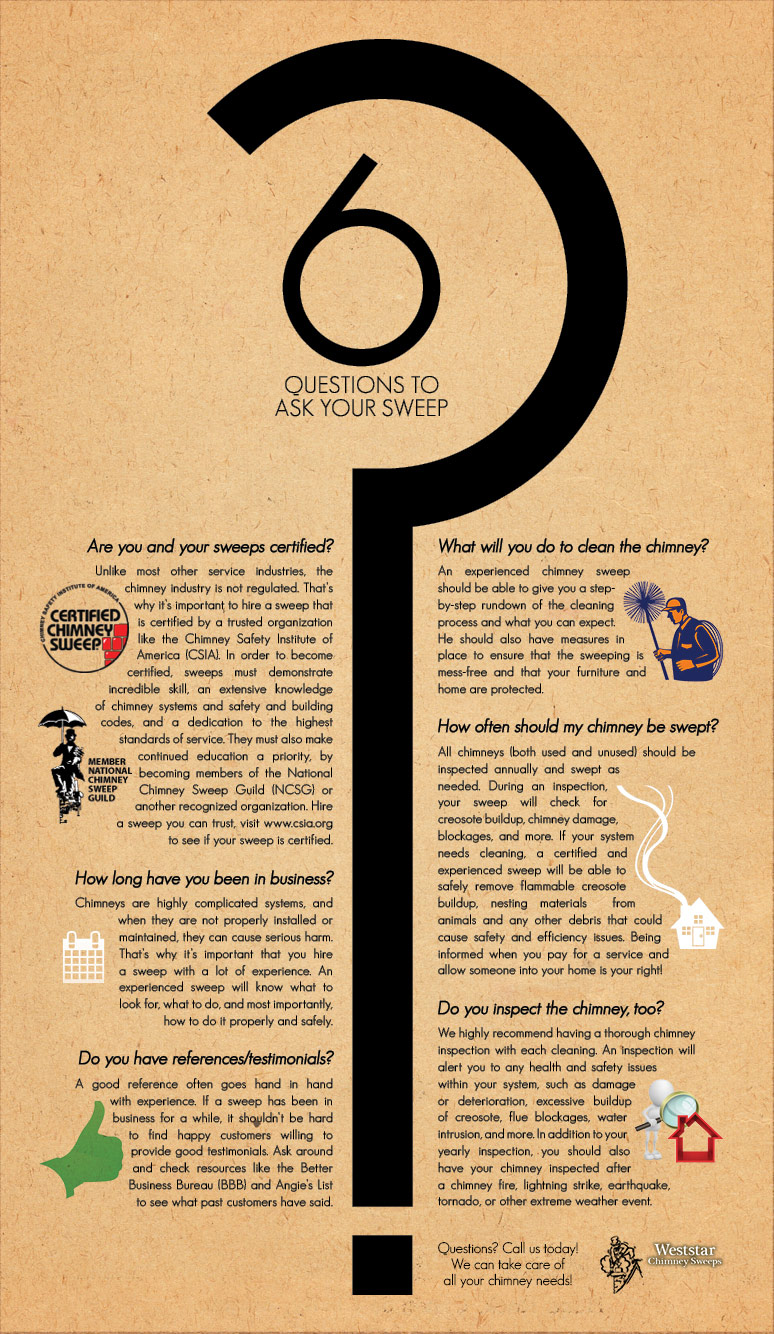
6 Questions for Your Sweep

Here are some common questions to ask your sweep…this can help you as a homeowner, make better choices when it comes to your chimney maintenance.

Making good decisions means being informed. Here are some basic questions to ask your sweep.

Making good decisions means being informed. Here are some basic questions to ask your sweep.

The Basics of Ash Removal

Don’t Let It Accumulate 

Did you know that the ash that is produced after burning combustible materials can still be used in other places? Did you also know that it’s not good to completely remove the ash? Despite the many toxins, there are still components in ash that make it beneficial and useful.

But Wait, There’s More

You don't want to remove ALL of the ash from your fireplace. Leave some about an inch thick.

You don’t want to remove ALL of the ash from your fireplace. Leave some about an inch thick.

Ashes are made after burning combustible materials. They are powder-like and are not something you’d like to smell especially for people with sensitive noses. They are harmful to people but they can still benefit you if you have a garden. There are materials in the ash that can contribute to a healthy growing plant.

The ash should not be taken out completely, especially when you are constantly using your fireplace. This is because it might be difficult to start out a fire once you use it again; more time, more effort, less fire, less heat. An inch thick of ash will suffice. This can help protect the area in your firebox.

But removing ash in the fireplace is still something that needs our attention. It can cause all sorts of health hazards and can eventually end up starting a fire. Our company specializes in keeping your fireplace and chimney at optimal functioning level so it’s important to let us do our job. But in any case, you should also be aware of the things you need to do to successfully remove ash.

Removing the Ash

Get your metal trash bin, metal dust pan and broom ready for sweeping. Make sure that the ash is cool before you attempt to do any cleaning. The reason is to make sure that no hot coals are present. Once cooled, take out the firebox and sweep it and put the ash in the dust pan and into the trash bin. This step-by-step process should be done at least three to four times a week depending on the number of times you use your fireplace.

It’s good to let a CSIA-certified sweep do the cleaning. This is usually done when you have your  inspection and clean-up. We’ve been serving the people of San Diego County for fifteen wonderful years, so feel confident with our certified techs. Feel free to contact us. We are happy to help.

5 Common Chimney Replacements

Replacing parts of your chimney that are not properly functioning or are outdated can increase its performance and ensure safety.

Replacing parts of your chimney that are not properly functioning or are outdated can increase its performance and ensure safety.

Serving all of San Diego, California, West Star Chimney Sweeps offers an array of services to our customers. From chimney sweeping to dryer vent cleaning, we do everything we can to keep our customers secure, healthy, and confident in the safety and efficiency of their appliances. One of the things most frequently required of us are chimney part replacements. We often swap.

Why Your Chimney Needs to Be in Good Condition

Before we tell you about the chimney parts we replace most often, we want to tell you why it’s important to keep your chimney and all of its components in great working order. Simply put, a chimney that’s worn out may:

  • Become a fire hazard
  • Begin to leak and cause water damage
  • Become clogged and unable to vent properly
  • Vent toxic gases into your home
  • Deteriorate beyond repair and require total replacement

West Star Chimney can make sure that your chimney and heating appliance are in great condition so that you don’t have to worry about any of these things happening.

Chimney and Fireplace Parts West Star Chimney Replaces Most Often

Among other replacements, we are often required to replace the following five parts on fireplaces and chimneys around San Diego:

  1. Chimney Caps: A brick and mortar chimney without a cap is like a house without a roof. Chimney caps play lots of important roles, including keeping water out, keeping birds and bees out, keeping sparks in, and eliminating downdrafts. By keeping the wrong stuff out and the right stuff in, you’ll protect your chimney from accumulating fire hazards (think leaves and limbs, nests, trash, and other debris) and reduce the chances of carbon monoxide poisoning and chimney fire. You’ll also be protecting your chimney, assuring its longer life, and safeguarding your home from expensive water damage.
  2. Dampers: Chimney dampers are perhaps our favorite chimney part to tell homeowners about. This is because we get to tell them how we’re about to save them money by installing a top-sealing damper atop their chimney. After all, having a chimney without a damper is not unlike leaving a window open year round; just imagine how much you’d spend on extra energy costs if you left a window open all the time. A damper will keep water and debris out of your chimney, but it’s most notable for the fact that the homeowner can open and close it, creating an airtight seal when the heating appliance is not in use.
  3. Hearth Screens: Whether or not you already have a hearth screen, West Star Chimney is happy to equip your fireplace with one. These screens offer lots of advantages, including peace of mind that if an errant spark flies out of your fireplace it will stay in your fireplace. It will also help keep pets and small children away from your fire and can update the look of your fireplace.

Have questions about caps, dampers, prefab panels, hearth screens, or any other chimney component? Call us at 619-338-8116 or schedule an appointment with us today using our online form.

Tips for Avoiding a Chimney Fire

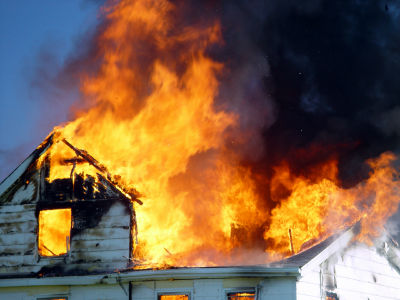
If you don't want this to happen to your beautiful home, you better learn the basics in avoiding chimney fires.

If you don’t want this to happen to your beautiful home, you better learn the basics in avoiding chimney fires.

Over 25,000 chimney fires in the U.S. last year were responsible for over $120 million in property damage. Chimney fires can quickly spread into house fires in a relatively short period of time. No one ever wants to experience a chimney fire, or worse yet a fire in the chimney that spreads to other areas of the home. This is an important issue, and there are things everyone can do to protect themselves and their families from the chances of a chimney fire ever affecting them.

Why Me?

Most chimney fires happen for one simple reason: improper usage and care of wood-burning appliances. The importance of yearly chimney inspections and sweepings cannot be understated, as they are the one true way to minimize the likelihood of a chimney fire sparking in the first place. The fact is that clean chimneys simply don’t catch fire.

What Causes Chimney Fires?

When wood is burnt, the emissions are expelled into the chimney. As these gases rise, they cool down and form creosote — a tar-like substance that sticks to your chimney or chimney liner. Creosote is extremely flammable and can be lit by even a small spark or floating ember from the fire below. The three most common causes of chimney fires are:

  1. Burning wet or unseasoned wood can increase the production of creosote.
  2. Failing to have your chimney swept often enough.
  3. Blockages in your chimney that can restrict air flow.

Knowledge is key to reducing the potential of a chimney fire happening in your home.

What can I do to Prevent a Chimney Fire?

Your first line of defense is always prevention. Make sure you have smoke alarms and carbon monoxide detectors in multiple locations within your home. Make sure you only burn dry, seasoned wood. Make sure you get your chimney swept at least once a year (more frequently is you use your fireplace more heavily). Make sure you never burn trash, cardboard or other types of waste, as these are more likely to produce sparks.

Chimney fires are a dangerous and serious problem to have, but the good news is that they are almost entirely preventable. Homeowners must be careful to only burn materials that are ready and meant to be burned. While using the correct fuel is important, a chimney fire can still occur even after taking all of the necessary precautions. This is why annual chimney inspections and sweepings are a critical part of your home maintenance routine. If your chimney is clean, the chances of a chimney fire occurring are slim-to-none. Don’t wait to call to schedule your inspection and cleaning. Our CSIA-certified chimney technicians will help to ensure that you and your family have a safe and happy heating season.