Chimney Services » Chimney Maintenance » Page 8
Our Company Blog
by Mike O'Mara | Nov 27, 2013 | Chimney Maintenance, fire safety
Fire Safety and Preparedness at Home
Every year, fires have claimed the lives of over three thousand Americans and have managed to cause injury to around seventeen thousand. A simple flame can turn into a blazing fire, changing a families’ life forever. This can be attributed to many things, including creosote build-up, blockages in your chimney and unsafe burning practices and materials. Always remember, the safest, most efficient burn is one with dry, seasoned firewood. Burning anything else increases risk and creosote buildup.
There are many family fire safety tips that are recommended by numerous fire safety agencies, but here are two of the most important precautionary measures of all – working fire alarms and a plan in case of emergency. Don’t let forgetfulness be the reason your home and family are put in harm’s way.
You put your family and home at risk when you fail to maintain working fire alarms and an escape plan.
Fire alarms are required on each level of the home and in each bedroom. Of course, no matter how many alarms you have, unless your batteries are working, they will not be able to do their job. Experts recommend that you check your batteries each time you “spring ahead” and “fall behind.”
Second, a fire escape plan is a necessity. The National Fire Protection Association provides a model for how to create this essential document for your home. Their website is also chock full of fantastic resources for the entire family. Just as batteries are key for alarms…practice is key for plans. Make sure all members of your family know what to do in case of a fire. Everyone needs to know to stay low to avoid harmful smoke, stop, drop and roll if clothing catches fire and to check doorknobs before exiting. The family also needs to know where to meet outside while waiting for firefighters.
When you cover these two critical bases, you can rest a bit easier knowing that your family is well-prepared. Call today to have your chimneys and fireplaces inspected and swept by the certified professionals of Weststar Chimney. Having been in business in San Diego for more than a decade, we are ready to take one worry off your plate. Don’t forget — the best way to avoid tragedy is to prepare rigorously.
by Mike O'Mara | Oct 14, 2013 | Chimney Maintenance
Your home is a gathering place for your family and friends to come together as one, but what do you do when there is an odor filling the home that you just can not get rid of? When you realize it is your chimney making this smell, air fresheners and candles will not be enough. Although some odors are normal, there are others that indicate a serious problem with your draft. That is when you call in the professionals at Weststar Chimney Sweeps.
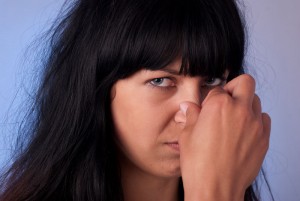
If your damper is open when you light the fire and you still have odor, it is time to have your chimney cleaned and inspected.
The first thing an inspector will ask is when you had your last chimney sweep. One of the most common causes for chimney odor is the build-up of creosotes inside the chimney. The resulting smell is usually worse in the summer due to an increased humidity, when it rains, or when the air conditioner is running inside of the home. An experienced professional can have the job done quickly without any mess inside of your home. While this will help relieve most of the odors, it will not eliminate all of them. The longer creosotes sit in the chimney, the deeper they sink into the construction of the chimney. One way smells are allowed in you home is the air pressure that forces them inside. When the air pressure is changed the smell will become more or less apparent. Old parts or damper and exhaust vent closures can cause this as well as new equipment such as a furnace or water heater, or new windows.
There are ways to fix the negative air brought in by your chimney and if one method does not, you may need to do a combination of things. First, if your fire damper s not in use, you should keep it closed. Unless there is a problem with the seal, this should solve you problem. Also, some people recommend having a glass screen installed so that air cannot pass through into the home. Lastly, if you have other appliances running in the home change their airflow, as they all will be working against each other. These tips should not only get rid of the odor, but also keep your name clear of the stinky homeowners list.
by Mike O'Mara | Sep 29, 2013 | Chimney Maintenance
Water Leaks In the Chimney Are Never Good!
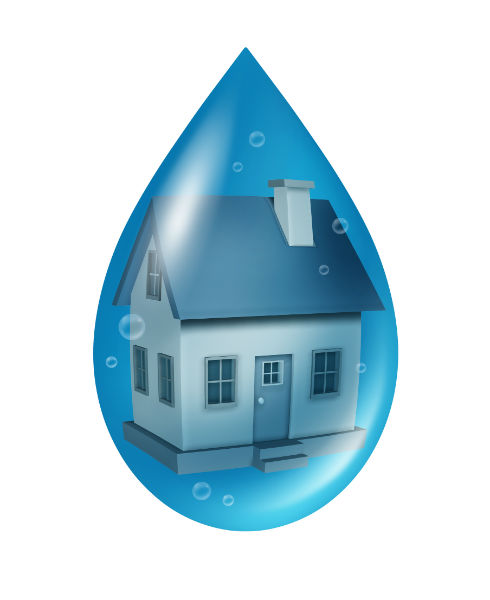
When most people think about problems that could occur with their chimney, they imagine animals moving in or leaves preventing proper ventilation. What they do not consider is what might happen if excessive amounts of water accumulate within the chimney. In fact, water leaks in the chimney can present some of the most dangerous situations in a chimney. Every homeowner should be aware of the risks and make sure that their chimney is safe and dry. And if there is water making its way in, we can repair it.
A properly installed chimney cap and fitted flashing goes a long way toward waterproofing your chimney.
When the chimney becomes wet, it will quickly weaken and begin to crumble. Homeowners should keep in mind that this is true not only of a masonry fireplace but also of a prefabricated model. Once it starts to crumble, it is only a matter of time before the fireplace starts to collapse. This damage can quickly spread and cause structural damage to the home that will go much father than the fireplace.
Another thing to keep in mind when water enters the chimney is that it will freeze and melt along with the weather. This means that the material in the chimney will expand and contract each time. The result will be cracks in the chimney, which not only compromise the stability of the structure but can cause a great deal of other dangers. This is often the condition that starts a domino effect of dangerous chimney issues.
Once there are cracks in the chimney, the heat barrier is not as effective as it should be. This means that the structure of the home is getting much hotter than it should. In addition, it means that combustible gasses travel into the home instead of leaving the way that they should. The result is a dangerous combination of circumstances that can very quickly turn into a devastating house fire.
In many cases, moisture gets into the chimney becomes there are problems with the flue liner. Older homes may not have liners at all and, if this is the case, one needs to be installed before the fireplace is used again. Metal liners tend to hold up better than clay or tile models but even they are not foolproof if they are not installed properly. It is imperative that there are no spaces at all between the flue liner and the actual wall of the chimney. Even the smallest space could allow water in, starting a whole host of problems.
The problem is that the average homeowner has no way of knowing when there is water inside of their chimney. Installing a chimney cap is a great way to avoid many of these issues because it keeps rain and snow out of the chimney. However, it is still important to have a certified chimney sweep inspect the chimney each year. They will be able to tell easily if there is a problem with the liner or if water is entering the chimney in any other way. This should be done every year, either at the beginning or end of the fireplace season.
There are many issues that can arise with a chimney, which is why proper chimney maintenance is so important. Water in the chimney may not seem like a big deal but it can actually be the start of many problems. The result may be significant structural damage to the home or even a house fire. To avoid these issues, install a chimney cap and have the chimney professionally inspected each year.
by Mike O'Mara | Sep 24, 2013 | Chimney Maintenance
With the wintertime ahead of us, many homeowners will begin to break out the blankets, hot chocolate, and the fireplaces. Before getting too cozy, make sure you have gotten everything ready for a safe burning season. Chimney sweeps are the first step in preventative maintenance, along with having someone check for minor damages that are recommended for once a year.
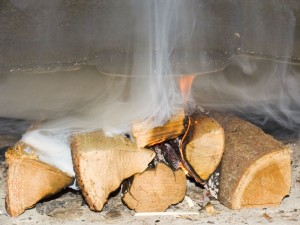
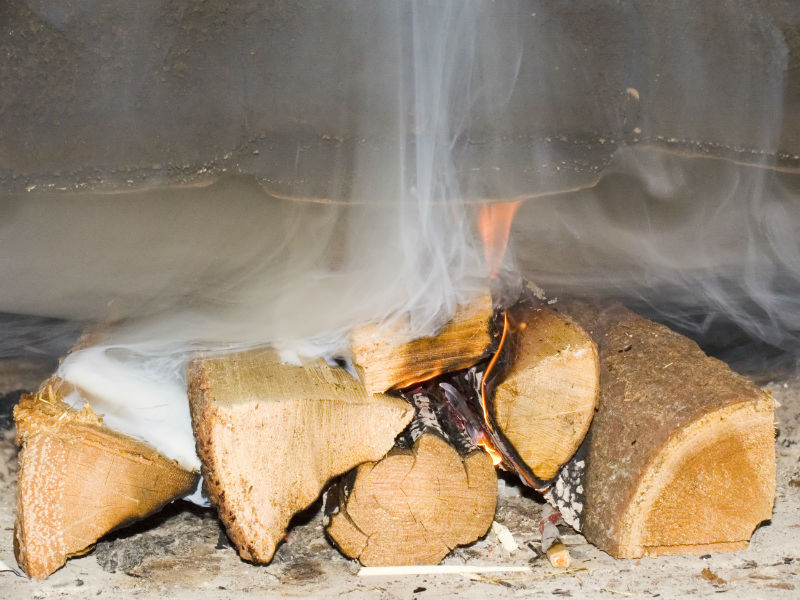
If you have a smoky fire, this could be a sign there is blockage in your chimney.
One of the main problems caused with a fireplace is a draft problem within the chimney. The capacity, how much air can flow through the chimney, and the draft, how much air can flow through the chimney, work together in a positive correlation. When there is a problem it can become dangerous because smoke is not able to flow out of the home. Chimney sweeps are very important to preventing draft problems because they remove all the layers of creosote that have built up in your chimney. This will also remove any fallen pieces of brick or twigs and leaves. Also, they make sure that there are no leaks in your chimney, as any in the lower half will cause airflow issues.
If none of these are the cause of your chimney’s problem, you may need to look further or get a professional. Sometimes the size of the chimney is the problem, whether it is too wide or too short, and just by doubling the height you can increase the draft by 41 percent. If you have a small home that is well sealed, your house could be too tight to allow the air inside to ventilate. If this is the problem, opening a window may be a quick fix. If after checking all of these places you draft is still not fixed it may be time to get a new combustion-air system. Unfortunately, the last result would be to install a new chimney. If you recognize a problem, do not ignore it as a small problem can always grow into something bigger.