by Mike O'Mara | Jul 9, 2014 | Chimney Maintenance
Prevention is The Cure: Top 3 Chimney Repairs
It’s tough to manage and organize your own home. You have a handful of big and important decisions to make, plus a seemingly never-ending to-do list. You are not only concerned about the well-being and functionality of every aspect of your home, but you also need to think about the safety and security of you and your family.
This sentiment is doubled when homeowners have chimneys in their home. Based on our years of experience here at Weststar Chimney Sweeps, we know what you need to do to optimize performance and safety.

Over the course of your home’s life, your chimney will likely need repair. Here are three of the most common.
To help you further, here are the top 3 parts of the chimney that are usually subjected to repair:
As its name suggests, the chimney crown is located at the top most portion of the chimney. The chimney crown’s main function is that it covers the chimney to prevent moisture from filtering down in the stone or brick walls. Basically, it protects the mortar, which in turn holds everything in place. This part of the chimney is constantly subjected to drastic changes in weather and temperature so with time, the chimney crown may have cracks and leaks that may cause varying degrees of problems.
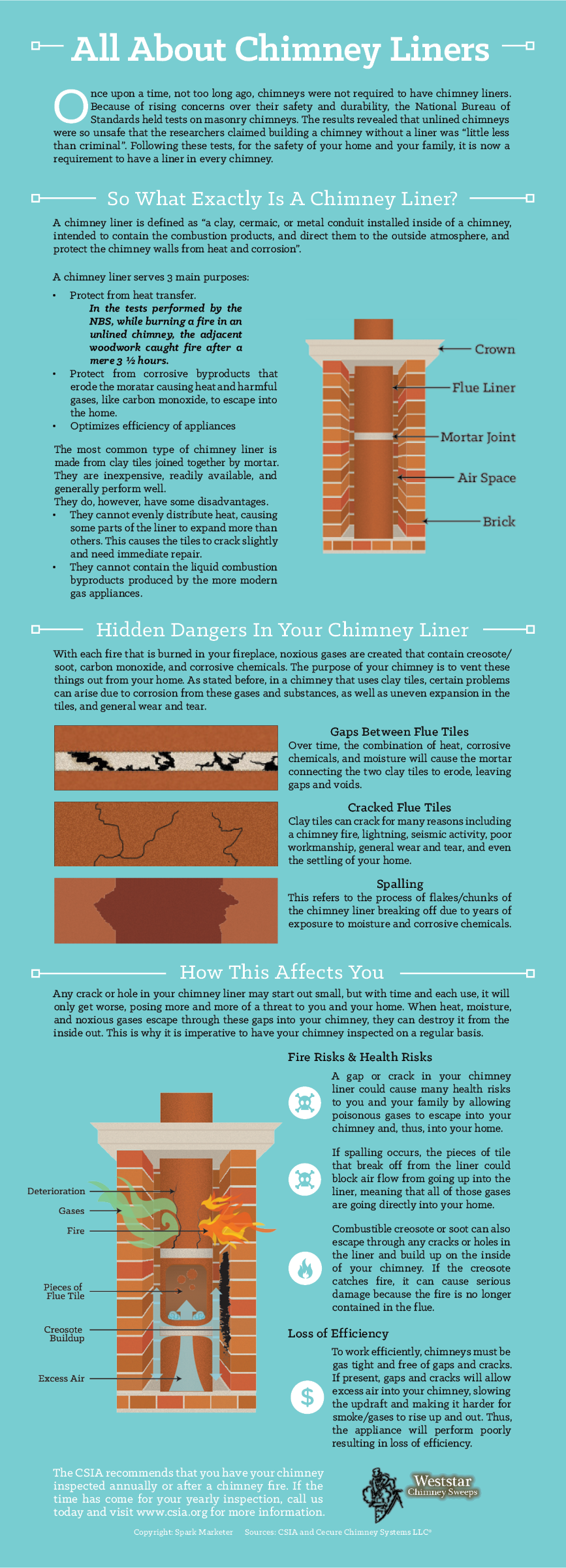
According to the Chimney Safety Institute of America a chimney liner is a; “clay, ceramic or metal conduit intended to contain the combustion products and direct them to the outside atmosphere”. So basically, your chimney liner not only protects you, your family and your home from the harmful products of combustion and burning, it also protects your chimney and allows it to last longer.
Flashing is done to ensure that your chimney is waterproof and safe. Flashing is basically a sheet of metal which consists of two panel parts. These are installed to make sure that the area where the chimney meets the roof of your home is watertight and safe.
To know your chimney and to avoid huge damages, you need to understand how each part of your chimney works. You need to have an idea what each part is for to see their importance. Once you get to grasp that, you’d be more careful and mindful of your chimney as a whole.
by Mike O'Mara | Jun 9, 2014 | Chimney Maintenance
What is the one thing that’s been an annoyance to chimney owners everywhere? Masonry stains. Throughout time, numerous homeowners have complained and scratched their heads over the hassle and irritation that these unwanted stains bring.
At Weststar, we care about and respect each of our customers, and are dedicated to ensuring that their chimneys and dryer vents are well-maintained and functioning properly. Whether you need masonry repair or annual maintenance, we’re here to help.
Here at Weststar Chimney Sweeps, we do our best to cater to your chimney needs. So, here are a few things that you should know about chimney stains.
Not all stains are created equally.
The stain on your chimney is characterized by the source of the stain. Once you are able to identify which type of stain you have, it will be easier on you or the chimney professional that you hire to find a solution.
The following are some of the most common stain complaints:
- Smoke – It only makes sense that majority of the chimney owners complain about having smoke stains and are earnestly looking for ways to remove them. Since smoke is a natural byproduct of burning and the chimney is an area where the burning process occurs frequently, there presence of smoke is inevitable. Smoke stains, therefore, are going to occur.
- Mildew – This is the white substance (a fungus, to be more specific) that usually grows on the surface of wet or warm conditions.
- Efflorescence – This is that white, powdery and, often times, fluffy stuff (or so it appears) that accumulates around your chimney masonry.
- Rust – We all know what rust looks like, right? And you may say that rust only appears in metal materials. But actually, rust thrives on both metal and nonmetal surfaces, therefore, you shouldn’t be surprised if you find a little rust in your chimney masonry every now and then.
- Paint – It may range from small whisks to huge splatters. Paint stains are usually brought about by artistic or domestic accidents. It may happen to households with or without children and is one of the most common chimney masonry stains.
How can you remove these stains?
As each stain is classified differently based on its cause, there are also various methods and chemicals used to remove each type of stain. Boral.com has a short summary of ways to remove various stains. But to some people, handling chemicals is something with which they’re not really comfortable. Another option, therefore, is to contact a professional to help you out.
Gone are the days when you had to worry about your chimney masonry stains. The answer to all your stain problems is just a phone call or email away. So what are you waiting for?
by Mike O'Mara | May 23, 2014 | Chimney Maintenance, fire safety
If you’re new to chimney ownership, it might surprise you when you learn not only that you need to be scheduling a professional chimney inspection each and every year, but that there are several different types of chimney inspections too.

It is vital to have your chimney inspected thoroughly at least once a year. Let our experts perform one of the three levels of inspection that is needed for your chimney.
Those different inspections are outlined as three different levels — 1, 2 and 3 — and Weststar Chimney Sweeps technicians are always happy to give you a rundown of when and why different inspections make sense for your system and your home. In the meantime, though, here are some basics to make those levels a little more clear:
Where Did These Levels Of Inspection Come From?
For a long time, the quality or thoroughness of your chimney inspection was largely left up to the individual professional doing the inspecting. While diligent, detailed chimney sweeps (like Weststar’s) have always been around, you generally just didn’t know what you’d get — a detailed peek into the state of your system, a quick glance with a flashlight and a mirror, or anything in between.
In January of 2000, the National Fire Protection Association outlined three different levels of inspection within NFPA 211, the standard by which our work — and the work of other CSIA-certified chimney technicians — is guided. This ensures that you receive a specific level of care, based on your chimney’s circumstances and needs, and that you know what to expect.
So What Should I Expect?
The Level of inspection that Weststar Chimney Sweeps technicians will recommend will be based on your specific system’s needs.
Level 1
If your system hasn’t changed — if you’re burning the same fuel in the same appliance with the same flue liner, etc. — you’ll do well with a Level 1 inspection, the least intricate (but still highly detailed) inspection. We’ll examine all of the readily accessible parts of your chimney, from the firebox up through the flue, interior to exterior, looking for structural soundness, performance issues (like obstructions or excess creosote) and damage (like flue liner cracks that could lead to a leak). After our inspection, we’ll share our detailed findings with you, and make any necessary recommendations.
Level 2
A more detailed Level 2 inspection makes the most sense in a couple of specific circumstances: when something in your system has changed, or if the property is changing hands. So if you’ve changed from wood to gas, added a new fireplace or insert, relined your flue or made other similar changes since your last inspection, Level 2 is appropriate. If you’re buying a home with a fireplace, a Level 2 inspection allows you to get the full picture of what’s about to become your responsibility — and potentially, your problem.
Level 2 inspections include that same thorough, top to bottom, in and out examination as Level 1, but we’ll also check your chimney in attics, basements and crawl spaces, look for proper clearance from combustible building materials and scan the flue using a specialized video camera that lets us get the closest look possible, and show our findings to you.
Level 3
A Level 3 inspection is really only recommended when a potential hazard is found and a closer look is needed — and that closer look can include removing building materials (like doors or drywall) that block off certain concealed areas. With these inspections, we’re leaving no stone unturned so we can be sure we’re aware of any dangerous or damaging problems that need to be addressed.
We’re always happy to talk chimneys — including inspections and other regular maintenance — with our valued clients. If you have questions, or would like to schedule your annual inspection, give Weststar Chimney Sweeps a call!
by Mike O'Mara | May 22, 2014 | Chimney Maintenance
“I don’t need a chimney cap. Why should I have a cap”. Well…recently, I got a call about birds in the chimney. The canine friend of the family would not quit barking at the fireplace. Not birds but a raccoon instead. Oh my.
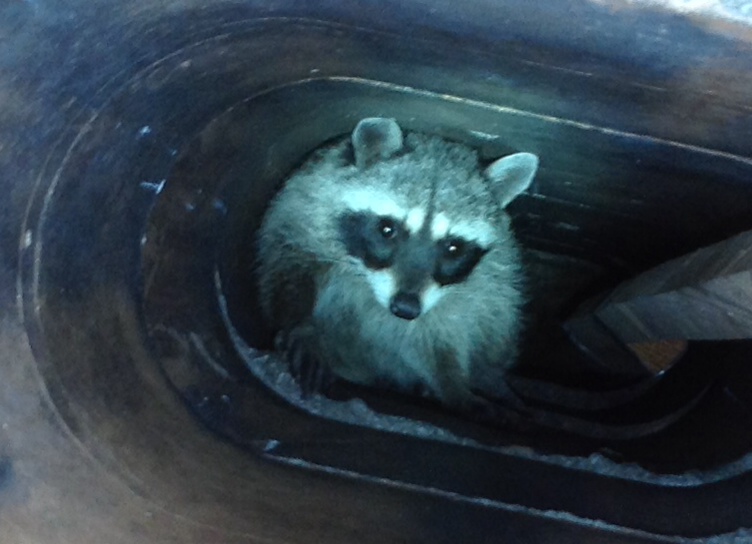
A chimney cap that is properly-sized and installed can prevent a face like this one sticking out of your chimney.
by Mike O'Mara | May 12, 2014 | Chimney Maintenance, fire safety
The exterior wall of your chimney is typically made of masonry. It cannot stand up to excessive heat well, so your flue liner does the job of protecting it.
by Mike O'Mara | Apr 30, 2014 | Chimney Maintenance
You won’t know it’s there until it strikes! Avoid CO poisoning through proper chimney care and maintenance.
When you are using your fireplace, you probably give little thought to the dangers of carbon monoxide poisoning; however, the Chimney Safety Institute of America states that every year over 200 people in the United States die from carbon monoxide poisoning due to the toxic gas entering their homes due to venting problems or leaks in their heating or chimney system. Additionally, 10,000 cases of illnesses due to carbon monoxide poisoning are reported every year. Fortunately, proper maintenance of your chimney, including an annual chimney sweep and inspection from a CSIA-certified chimney sweeping company like Weststar Chimney Sweeps, can prevent any possible carbon monoxide poisoning incidents from occurring in your home.
What does carbon monoxide do to you?
Quite simply, too much carbon monoxide in your bloodstream will kill you, and low levels of exposure to carbon monoxide over a period of time can cause many health problems. Unfortunately, when carbon monoxide is in the air, the protein hemoglobin in your blood would rather latch on to carbon monoxide and ignore life-giving oxygen. Because of this, your body will replace oxygen with carbon monoxide, and this causes greater or lesser levels of your cells suffocating, depending on the duration and intensity of the exposure to carbon monoxide. Low-level exposure to carbon dioxide includes serious side effects like permanent organ and brain damage. The elderly, infants, and people with breathing issues are in more danger to carbon monoxide exposure as their immune systems are compromised. Symptoms of carbon monoxide poisoning are similar to the common cold and flu, so it can take some time to diagnose the true problem. If you continue to suffer from headaches, fatigue, or even depression, ask your doctor to check your blood levels of carbon monoxide.
How does carbon monoxide form in my chimney?
A by-product of combustion, carbon monoxide can be found in both gas and wood-burning fireplaces, stoves, and furnaces. If the combustion process is incomplete, more carbon dioxide is formed. Restricted air flow (closed fireplace doors and an unopened damper) is a cause of incomplete combustion as not enough oxygen is able to get in to burn the fuel completely.
How does carbon monoxide get into my house from my chimney?
Several factors lead to the toxic gas leaking into your home. A damaged or deteriorated flue liner allows carbon monoxide to seep through its cracks. Other factors that cause carbon monoxide to enter your home are debris clogs, soot build-up, and animal or birds nests obstructing the chimney flue.
How do I prevent carbon monoxide from entering my house?
The best prevention against carbon monoxide leaks is an annual chimney sweeping and inspection from a CSIA-certified company like Weststar Chimney Sweeps. We will ensure your venting system and flue liner are in good shape, and if not, we provide chimney repair services to fine-tune your chimney so that it works efficiently and safely.
If you have any more questions about the dangers of carbon monoxide, contact Weststar Chimney Sweeps, and our staff will be happy to answer them as well as schedule a chimney sweeping and inspection to ensure your home is carbon monoxide-free.